
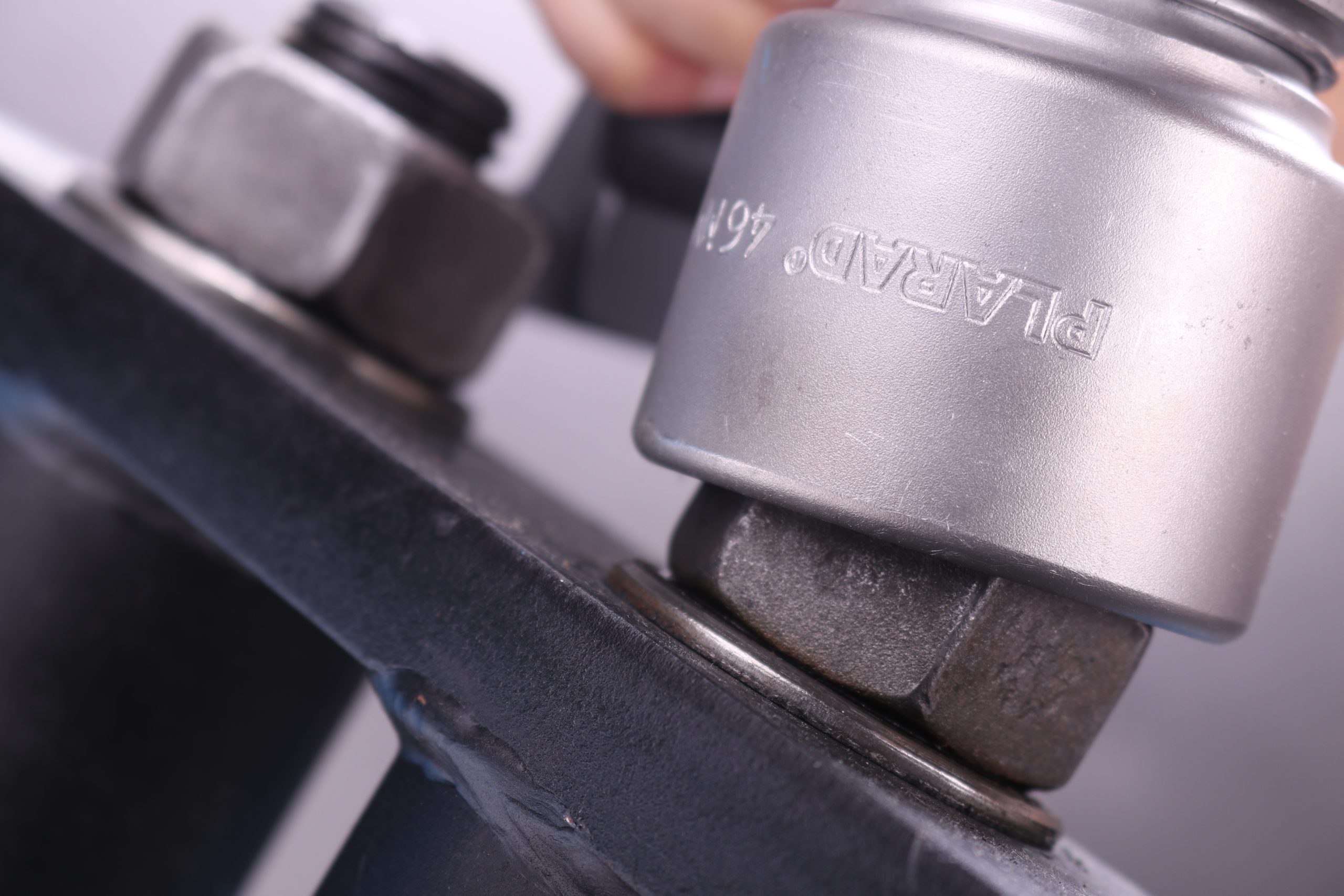
Bolts are everywhere. They hold bridges together, secure aircraft components, fasten machines in factories. And yet, they are subjected to more misconduct than almost any other mechanical element. The tricky part is that a “simple bolt” is anything but simple. Behind this unassuming cylinder with threads lie physics, material science, friction, and plenty of practical pitfalls. This article explains why bolted connections are so tricky, how the force you apply relates to actual holding power – and why your bolt sometimes simply doesn’t have the strength you expect from it.
The Pitfalls and Common Mistakes in Practice
Despite correct tightening parameters, bolted connection failures occur regularly with expensive consequences – unexpected downtime, safety risks, or product recalls. These failures rarely stem from malice, but rather from a combination of carelessness and a lack of understanding about the underlying mechanics.
The Human Factor: A classic example – a factory worker finds the squeaking noise during tightening annoying, so he applies additional lubricant to the bolts. A practical idea with fatal consequences: this lubrication dramatically reduces friction, which is exactly what keeps the bolt in place. The result is documented: bolts on a traffic control bridge loosen, and the bridge collapses. This isn’t a theoretical exercise from a textbook, but an actual documented case. All because someone wanted to avoid squeaking.
Material Defects, Tools, and Surface Finish: Cheap or improperly treated bolts can fail hours after tightening. A cheap electric screwdriver produces variations of over 25%, an old impact driver even exceeds 60%. Rough surfaces or misaligned bolt holes also cause unexpected problems. When two components don’t lie perfectly against each other, considerable force is initially needed to align them – this force is then exhausted before the actual holding force even begins.
The Secret: Torque and Clamping Force
This is the heart of fastening assembly and the biggest source of confusion. Something strange happens here that goes against intuition.
When you tighten a bolt with your tool, 100% of the force is applied. This force distributes as follows:
- Only about 10% of this force creates the actual clamping force
- About 90% is consumed by friction
This sounds like a bad deal. Actually, it’s exactly what makes it work: without this friction, the bolt would loosen itself and back out. Friction is the invisible security guard that keeps your bolt in place.
The Core Problem: If you don’t know the friction, you don’t know how tight the bolt really is. A concrete example illustrates the drama: an M10 bolt is tightened with exactly 40 newton-meters. If the coefficient of friction varies by just 10% (completely realistic), the actual clamping force jumps by approximately 40% up or down. This means: the same torque can produce entirely different results under different conditions.
How Professionals Handle It: Specialized providers like PLARAD therefore use torque-plus-angle methods, real-time controlled assembly systems, and friction measurements on-site. These professional solutions deliver precise results and systematically eliminate classic error sources. Anyone who relies solely on a simple mechanical torque wrench is essentially playing controlled roulette.
The Influencing Factors
A bolted connection is an interplay of many variables. Material, strength class, and surface treatment all play a role. Temperature is a silent game-changer – higher temperatures increase friction, while thermal expansion creates additional stresses. A machine that is tightened at 20°C and then operates at 80°C loses 15–30% of its clamping force – simply because the materials expand differently.
The assembly method determines accuracy: a manual torque measurement system has ±25–35% variation, while controlled-stretch systems achieve only ±8–12%. Preload losses are also important – after assembly, the holding force decreases by 5–20% because the material slightly deforms.
Why Bolts Break
Static Tensile Failure: A bolt is over-tightened or carries excessive load. The problem is extreme stress concentration in the bolt threads – the force concentrates at one point instead of being evenly distributed. During bending, stress at the thread root can be up to 4.6 times higher than in the shaft cross-section. A threaded bolt is therefore significantly weaker under bending than its simple cross-section would suggest.
Fatigue Failure: When a bolt is subjected to vibration or cyclical loading over extended periods, tiny cracks form. With each load cycle, these cracks grow microscopically. Eventually, the bolt becomes so weakened that it suddenly breaks – without warning. High-strength bolts are particularly susceptible because they lack the deformation capacity to absorb loads gradually.
Hydrogen Embrittlement: High-strength steel bolts can absorb hydrogen during galvanizing processes or when stored in damp environments for extended periods. This hydrogen makes the material brittle like glass. The critical scenario: the bolt looks perfect after assembly, then simply breaks hours or days later – without warning.
Conclusion: The Bolt and the Process
Bolted connections are underestimated in many organizations. On the surface, a bolt seems simple and unremarkable. In reality, it’s a complex system with many interdependencies.
The most common failures don’t result from a lack of theoretical knowledge, but from inattention to details: friction is not properly accounted for, incorrect tools are used, employees don’t understand the relationships, surface treatment is underestimated, or there’s no real validation of results.
The good news: with modern technologies and structured planning, this complexity can be managed very well. Experienced providers have developed specialized assembly systems that control torque, angle, and friction in real-time – systematically eliminating classic errors. You don’t need extreme effort – you need a well-thought-out process.
The best bolt is not the one with the most impressive specifications. The best bolt is one where the entire assembly process – from selection through calibration to final inspection – is properly planned and executed. With the right processes, a bolt reliably fulfills its function. Without them, reality will eventually show you where your weak points lie.


