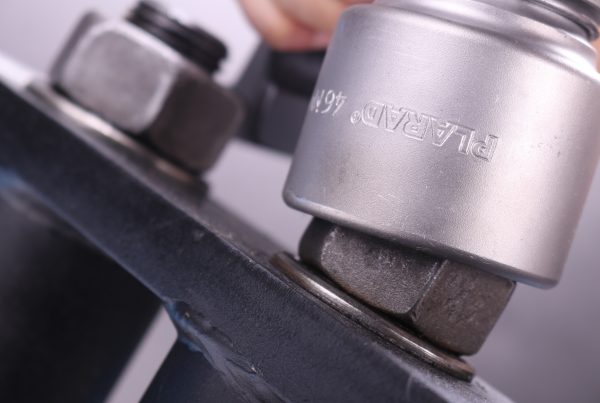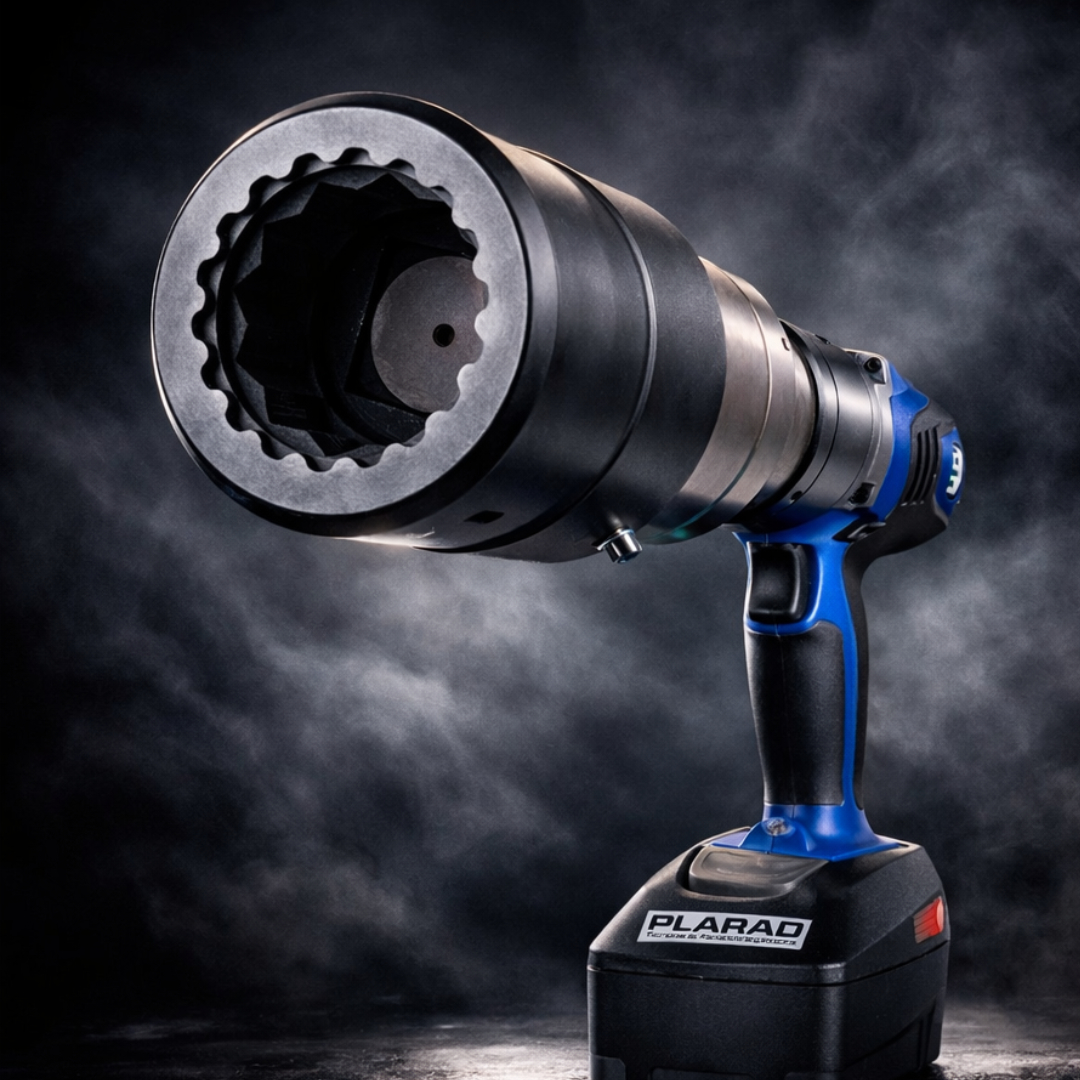
In many industrial bolting applications, enormous forces are involved. Whether in mechanical engineering, power generation, steel construction or the wind industry, controlled tightening of bolts generates torque that must be reliably absorbed.
Traditionally, this is achieved using so-called reaction arms, which brace themselves against adjacent components during the tightening process. This principle has been established for decades, but it also comes with certain limitations and potential safety risks.
Modern bolting concepts are therefore increasingly pursuing a different approach: low-reaction or reaction-free bolting systems in which the reaction forces are absorbed directly within the joint. This significantly improves safety, process control and assembly efficiency.
Why Do Reaction Forces Occur During Bolting?
When tightening a bolted joint, the physical principle of action and reaction applies: when torque is applied to the bolt, an equal and opposite counterforce is generated at the same time.
This so-called reaction force must be absorbed by the tool and safely redirected. In conventional torque systems, this is achieved using a reaction arm that braces itself against a neighboring component.
Especially at high torque levels—often in the range of several thousand Newton meters—the safe absorption and control of these forces play a crucial role.
Limitations of Conventional Reaction Arms
Although reaction arms are widely used, they represent a critical factor in many bolting applications.
Typical challenges include:
Unsuitable or hard-to-access reaction points
In complex installations or confined assembly situations, a stable reaction point is not always available.
Safety risks for the operator
If a reaction arm slips or shifts during tightening, it can lead to sudden movements of the tool.
High stress on the tool and operator
Lateral forces and unfavorable leverage effects can place additional strain on both the tool and the operator.
Limited process stability
Different reaction points can lead to varying tool positions, which may affect the repeatability of the tightening process.
For these reasons, many industries are looking for solutions that handle reaction forces in a more controlled and safer manner.
The Principle of Reaction-Reduced Bolting
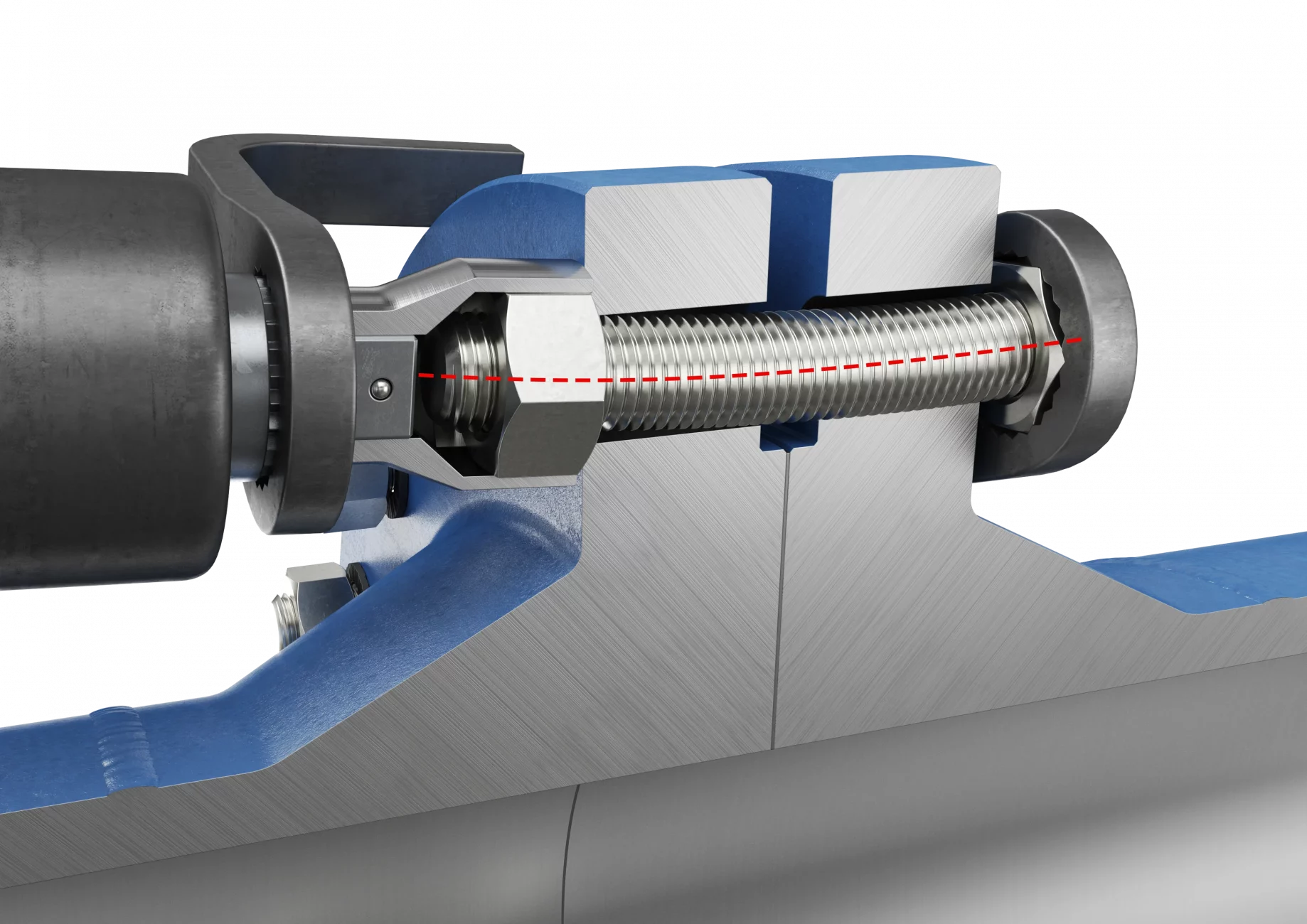
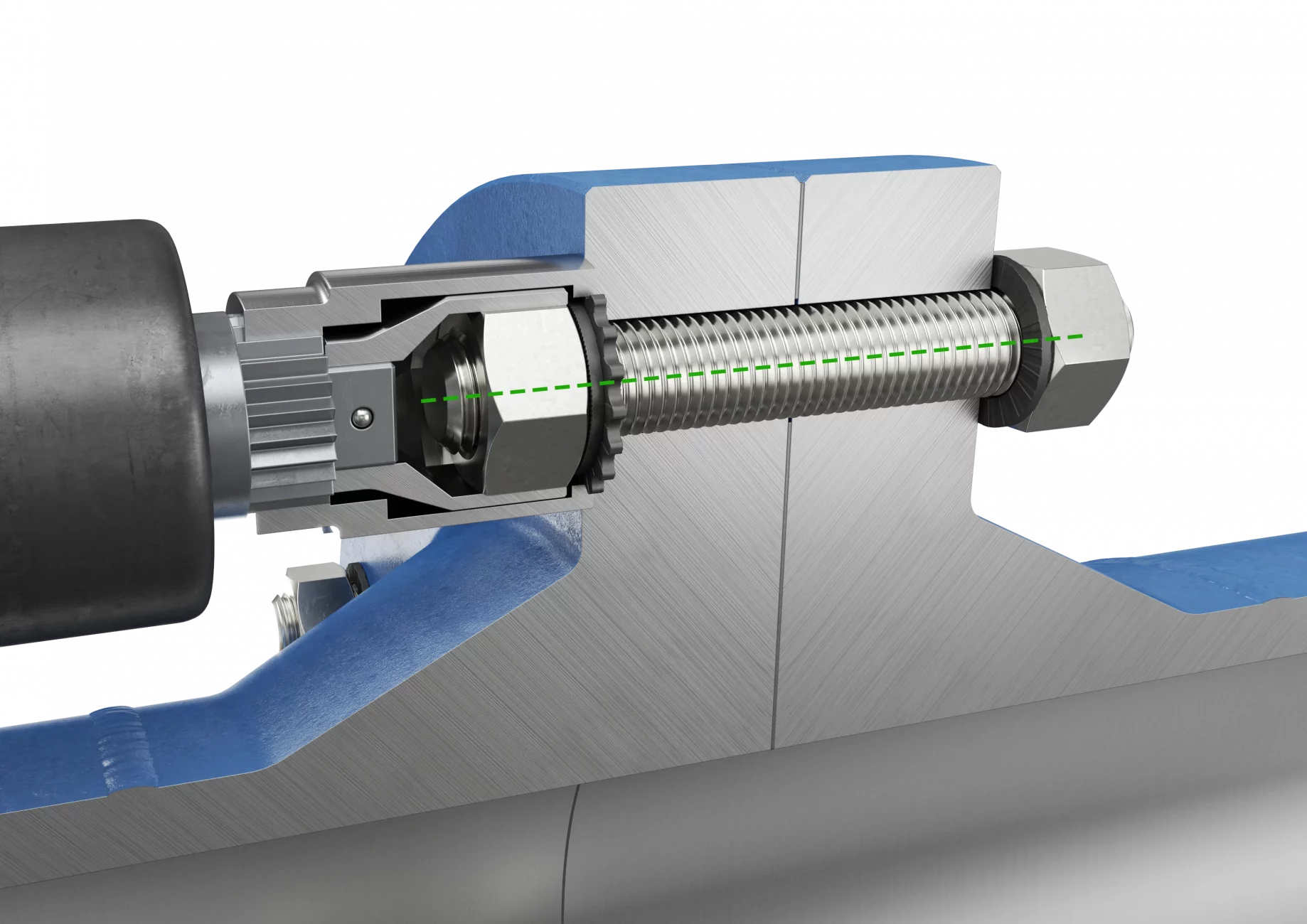
Modern reaction-reduced bolting systems aim to absorb the resulting reaction forces directly in the area of the bolted joint. An innovative approach uses special reaction washers that create a defined reaction point directly at the joint. Instead of bracing against external components, the torque tool reacts directly against the reaction washer. This creates a clearly defined force flow within the system.
This concept offers several advantages:
- Clearly defined reaction point
- Reduced risk of slipping
- Improved operational safety
- Higher repeatability in bolting operations
Since the reaction mechanism is integrated directly into the joint, assembly processes can be carried out in a much more controlled manner.
Advantages in Industrial Applications
Increased operational safety
Eliminating external reaction arms significantly reduces potential hazard points. Operators no longer need to search for suitable reaction points, which lowers the risk of incorrect reactions or uncontrolled tool movements.
Improved process stability
A defined reaction point ensures a reproducible tool position and thus greater process reliability in quality-critical bolting applications.
Simplified assembly
Especially in confined installation spaces, low-reaction systems significantly facilitate the work, as no external reaction points are required.
Higher efficiency
Less setup time, fewer adjustments and safer handling enable faster and more efficient assembly processes.
Application Areas of Modern Low-Reaction Bolting Systems
Low-reaction bolting solutions are increasingly being adopted, particularly in industries with high demands for safety and reliability.
Typical fields of application include, for example:
- Wind turbines
- Heavy mechanical engineering
- Steel and plant engineering
- Oil and gas industry
- Power generation and infrastructure
In these applications, even small improvements in safety and process control can have a significant impact on efficiency and operational reliability.
Conclusion
With increasing demands for safety, process stability and efficiency, conventional reaction arm concepts are increasingly reaching their limits. Low-reaction bolting systems therefore represent an important development step in modern bolting technology. By integrating the reaction point directly into the joint, assembly processes can be carried out in a safer, more controlled and more repeatable manner. This makes them an important contribution to reliable bolted joints in demanding industrial applications.